
Plastic in the Park: How Kingston Could Flip the Script Instead of Fuelling Stigma
by Melissa Reid, August 2026
Walk into Belle Park and you’ll see a disgusting quantity of single-use plastic water bottles scattered around. To the average critic on social media, this is just more proof of an "unruly encampment." Clear the camp, they say.
But let’s look further into this.
Water is Life
People aren’t living in the park for some fun adventure. It’s dangerous and uncomfortable. They have to lay their head somewhere. And, as humans, they need water to live. As is well documented, the water around Belle Park is polluted — after all, the place was a dump. There are no water fountains or taps in the park.
The Volunteer Logistics Loop
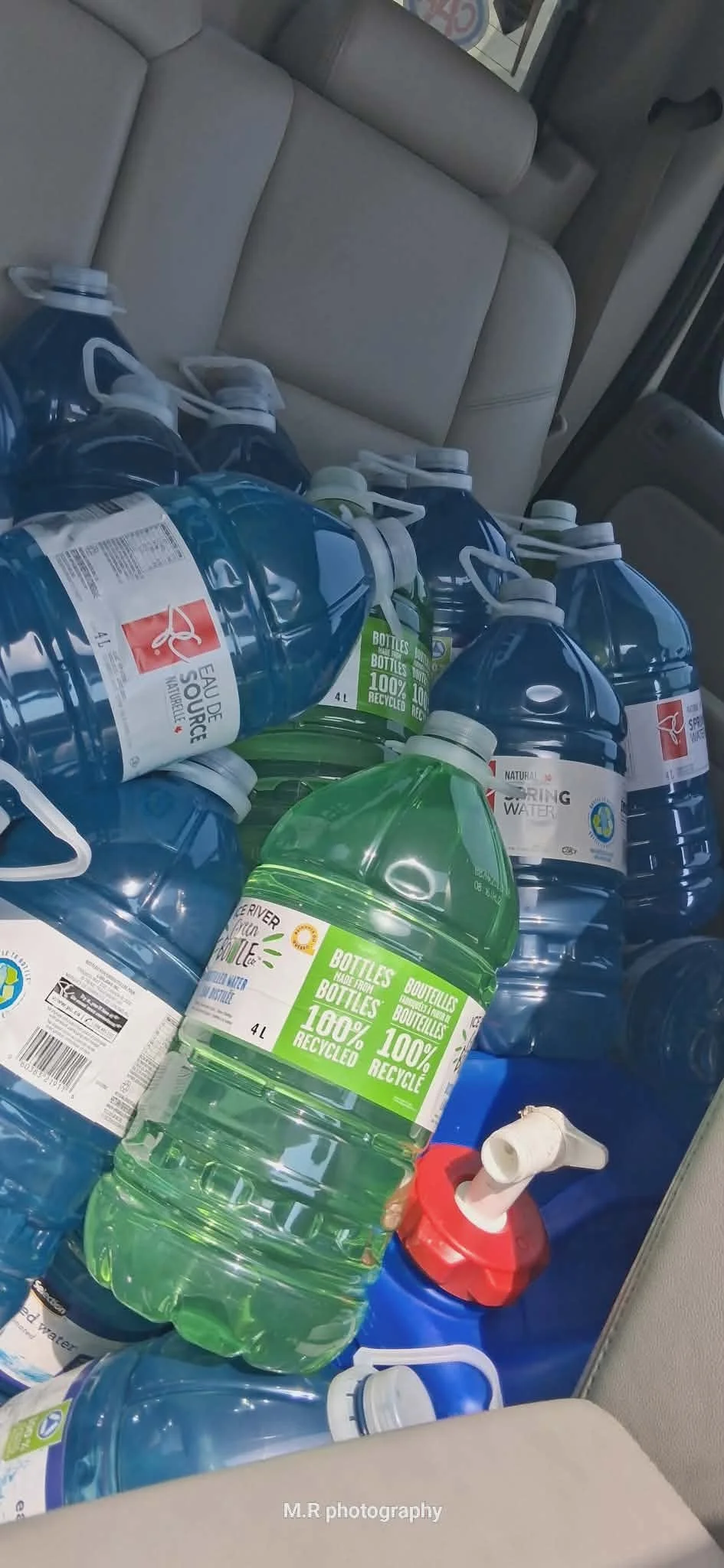
The City does provide some water. It drops it in pallets at a hub on Montreal Street and refuses to move them further. Volunteers act as the city’s unpaid, uninsured logistics department, manually hauling 30 to 35 cases per delivery day for the roughly 115 people who rely on the Feed the People lunch program each day. This adds up to over 77,000 plastic bottles every summer.
Not only is this too much plastic, but the physical toll is real. Our volunteers are burning out their bodies handling this delivery in the summer heat using their own vehicles, carrying unlimited personal legal liability without a corporate shield. Last summer, one of our volunteers even suffered a hernia during these rounds.
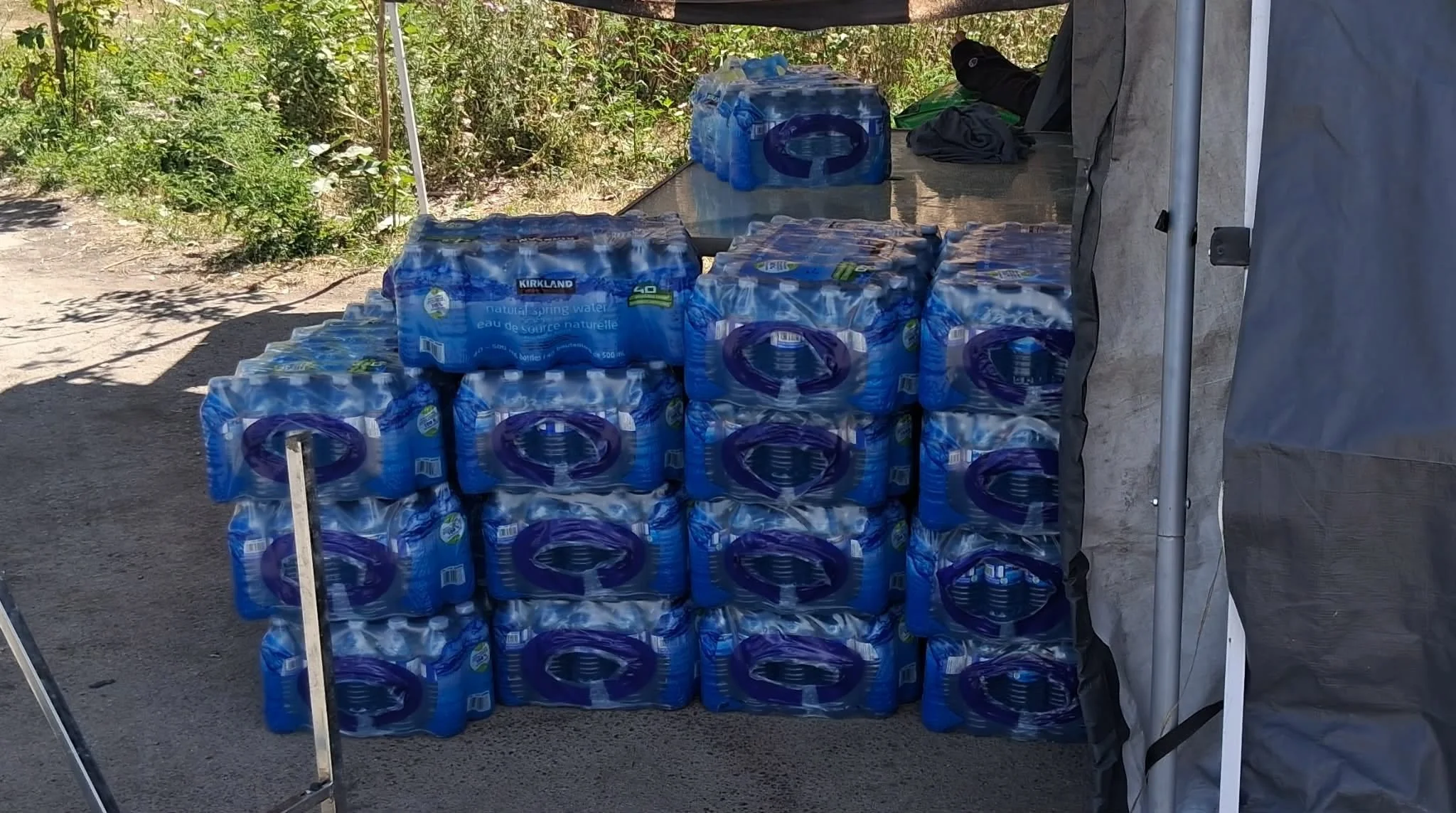
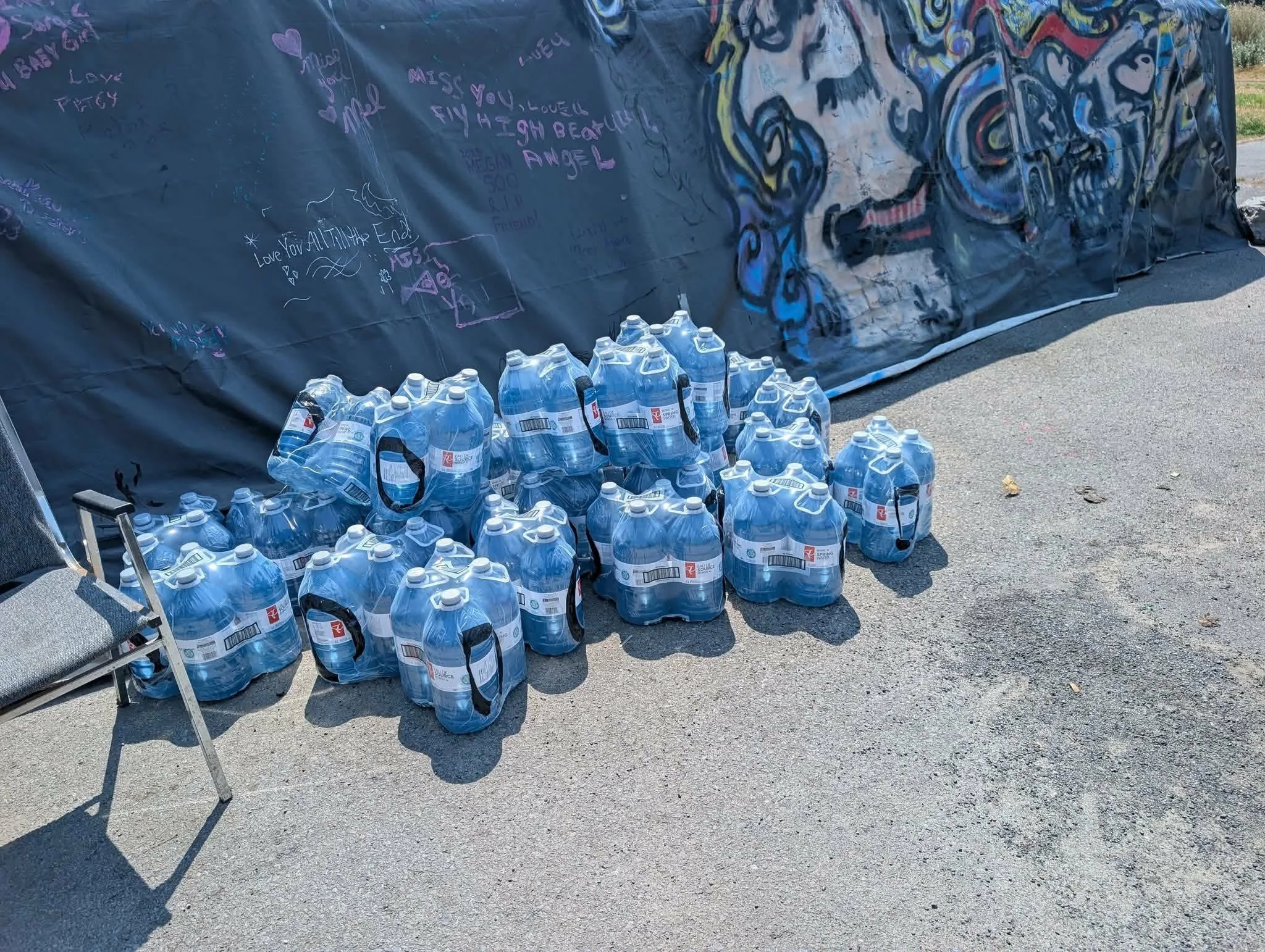
The $21,000 Circular Joke
The math is embarrassing. The city spends $9,600 on single-use plastic bottles, then cuts checks to private industrial waste contractors for up to $12,000 over the summer to haul that same plastic away. That’s over $21,000 of public money burned to manufacture a crisis, worsen stigma, and line corporate pockets.
The Convicted Polluter Points Fingers
I also have to point out that City Hall’s panic over park "cleanliness" is rich coming from a legally convicted polluter. In the late 90s, the city was convicted under the federal Fisheries Act for toxic leachate spreading from this exact site, a former landfill, into the Cataraqui River (see: R. v. City of Kingston, 1998, appealed 2004). Today, they have the audacity to blame unhoused folks for adding trash to trash.
The Idle Asset
The solution is sitting in the city yard: a 1,400-Litre Mobile Water Buggy. It costs $5.22 in raw water to fill. It gets deployed for various festivals and public events, but is mostly unused.
Every day, the Feed the People program operates from 11:30 AM to 2:30 PM, including setup and takedown. If the city simply parked that trailer there for those three hours, the waste would drop to zero, the resource would be monitored by a city worker, and the physical liability for volunteers would vanish.
Deploying a unionized worker (CUPE Local 109) for that shift costs roughly $114/day. Total cost for the summer? $10,968. The difference between a toxic, injurious, $21,000 plastic nightmare and a professional, insured municipal utility is only $1,340.
In a recent conversation with Councillor Greg Ridge, it was suggested that we use blue bins to collect the empty bottles. But here too we get into a loop: who is going to empty those? And a recent application to use the Water Buggy in Belle Park was instantly rejected. So if you’re angry about the state of Belle Park, don't blame the people trying to survive the heat or the volunteers straining their bodies to keep them alive. Blame the administrators choosing corporate waste over public infrastructure.
Clean water is a human right and a municipal utility, and should be available to all. Let’s put the Water Buggy to work!
Melissa Reid is the founder of the Peer Outreach Empowerment Team Alliance (POET) and a fifth-generation Kingston resident. She serves as an outreach advocate and community leader dedicated to supporting unhoused populations and advancing local municipal solutions in Kingston.
References
Municipal Equipment: Utilities Kingston - Water Trailer Service
Belle Park Landfill Conviction:
Environmental Pollution Standards: https://www.canlii.org/en/on/onca/doc/2004/2004canlii39042/2004canlii39042.pdf