
Council gets behind allowing Feed the People to feed the people
by Anne Kershaw
Aug 22, 2026
Reprinted with permission from the Kingston Crow on Substack, with photos by Laura Murray
Votes reflect call for city to combine compliance with compassion
CITY COUNCIL decided it wasn’t going to let some pesky city rules get in the way of putting food into people’s stomachs.
“We have a heart and we care,” said Councillor Gregory Ridge at the Aug. 11 council meeting. “It’s just that sometimes we have to find the right avenue for what we’re doing in our role as representatives.”
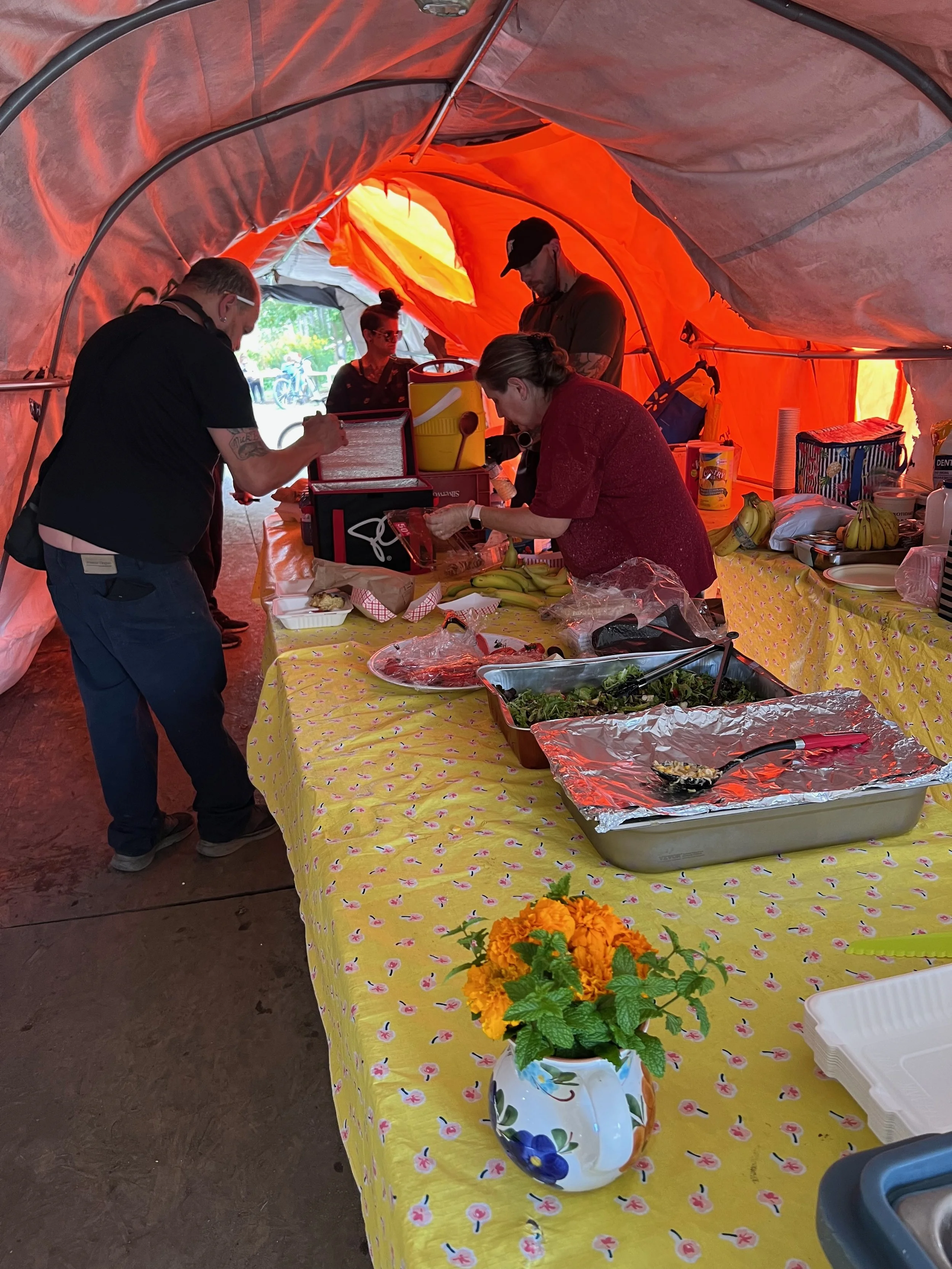
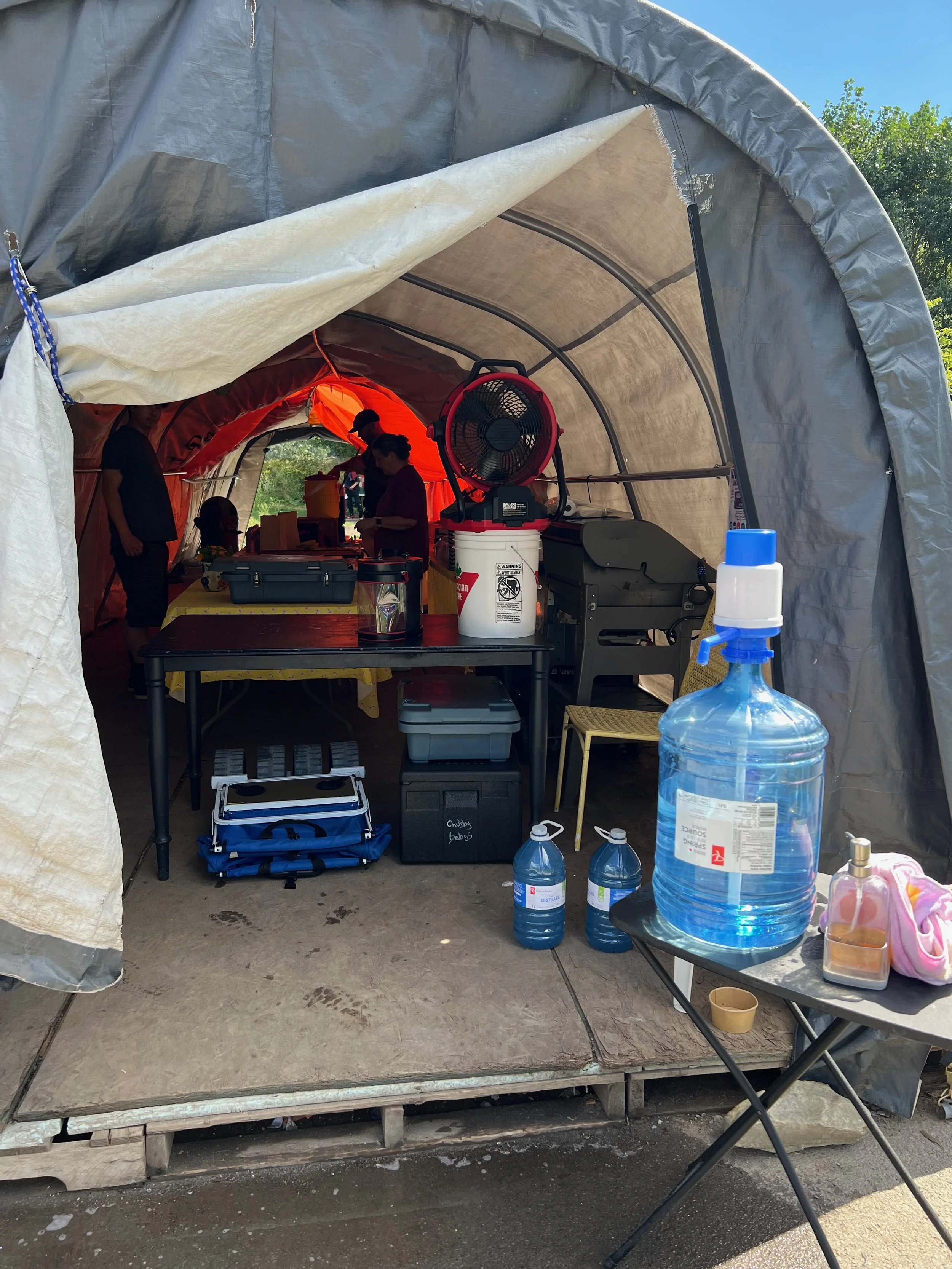
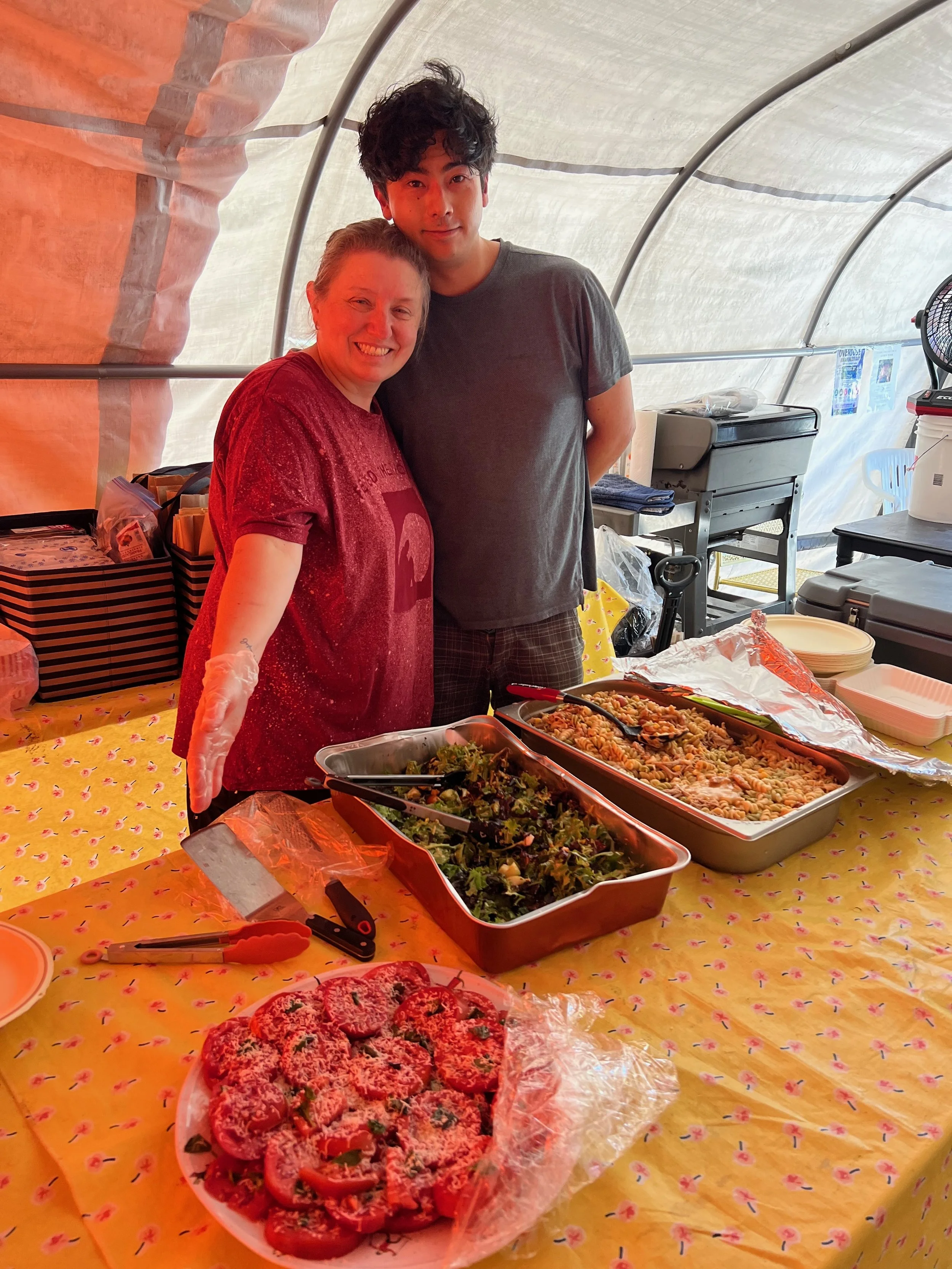
Council voted unanimously last week to bend the rules so that Feed the People volunteers can keep providing lunch at the Belle Park site every day, year-round to up to 150 people.
After learning of the City’s decision that the community group didn’t qualify for funding under a new harm reduction program, the 100-strong local volunteer movement was desperate to find a way to be able to keep offering their service. Operating out of a plastic tent in Belle Park with no access to water, plumbing or electricity, the community group had been unable to meet the City’s park permit, licensing, and insurance requirements.
Lack of clarity
Although originally turning Feed the People down, the City invited it to re-submit its application. Council delegate and Feed the People volunteer Melissa Reid referred to a communications breakdown with the City, noting a “severe lack of clarity” around eligibility issues. She expressed concern about leading partners of Feed the People into “a compliance trap” unless the rules could be made more clear.
“If these contradictions can be officially clarified that would be wonderful,” Reid said. “Otherwise we will be forced to withdraw our application and we don’t want to do that.”
Council agreed last week to City staff’s recommended plan, developed with guidance from Councillor Conny Glenn, to help Feed the People become compliant and eligible for a $70,000 grant. This involved adjusting awarded funds to ensure the group can cover insurance costs and applicable municipal fees, and waiving city permit fees.
A solution found. But the issue clearly touched a sore spot with some councillors.
Councillor Brandon Tozzo, though sympathetic to the cause, expressed his “continual frustration” at having to solve problems created by the province.
“We’re throwing $280,000 at a problem that was ultimately a decision of the provincial government to shut down the consumption treatment centres. So once again, we’re putting a Band-Aid on a problem that the provincial government started.”
Tozzo was referring to funds the City has allocated to local organizations for a one-year pilot project aimed at helping to mitigate harm caused by the planned closure of the Consumption and Treatment Services on Sept. 30. Five organizations were awarded a total of about $211,000. Add to that the $70,000 now also going to Feed the People.
Tozzo said he hoped more political pressure would be re-directed from the municipality to the province. “Thank you all for coming out to put pressure on us, and I totally understand, but please go back in the next provincial election and choose a government that’s more sensitive to the needs of the vulnerable in the community.”
Pressure on the province
Tozzo voices an issue that was high on the agenda at last week’s gathering of councillors and mayors from 444 cities and towns across the province at the Ontario Association of Municipalities’ annual conference. In calling for a new fiscal framework for cities, Ottawa mayor Mark Sutcliffe said, “Municipalities are punching above their weight, but the weight keeps getting heavier and heavier. That doesn’t make sense anymore, and I think everyone in this room knows it.” Councillor Tozzo agrees, “If we are expected to expand into areas of provincial retrenchment, we need more stable funding than property taxes, which are regressive, and user fees.”
Another Kingston councillor noted that the issues surrounding Belle Park’s lunch program illustrate the problem of outdated policies that don’t recognize today’s reality.
“There seems to be a simple lack of humanity behind some policies, said Councillor Ryan Boehme of Pittsburgh District. “When you sit in these chairs, it can become very difficult to listen to some of the stories and hear some of the suffering and the trauma that’s out there and feel handcuffed by policies and lack of funding.”
Old policies, new reality
An important question for city council, he said, is how “to create policies that function with the community that we now live in. Some [existing policies] don’t properly recognize that we have new challenges today such as a horrible housing crisis and a food insecurity crisis. Some policies just don’t fit.”
Councillors were clearly moved by the three Feed the People delegations on Aug. 11 who recounted frustrations in their interactions with the City and explained the unique nature of what they provide.
People who use the lunch service include those living with injuries, mental illness, addiction, disability and deep trauma, and “violence and loss most of us can barely imagine,” said Feed the People volunteer Pamela Gray.
“It’s one of the few places in the city where people are welcomed without judgement and where someone notices if you haven’t showed up, where people are seen and spoken to and treated with dignity,” she told council.
“This is not an extra or an optional program. It’s part of the fragile support system that keeps people alive and connected,” Gray said. “We have to make sure we’re not unintentionally breaking the very thing we rely on.”
‘Critical service’
Feed the People is supported by 50 local businesses and previously received no funding from the City. Most years, the organization spends about $370,000 on food and supplies. This year it expects the amount to get closer to $500,000.
Volunteer Linda Abbott described Feed the People as a critical service for those individuals who are “too weak, too ill, or addicted” to get to other locations where meals are provided.
“We offer more than food,” she said. “We offer dignity and a constant presence for people who often have nowhere else to turn. During lunch services, we monitor how people are doing, and we get people up and arouse them from being passed out to ensure they are awakened, coherent and getting the food they need.”
Since May, Feed the People has called 911 nine times when help was needed to help stabilize individuals on site. Abbott noted that on just the previous weekend, “two people who we feed regularly died of overdoses.”
The long-time Kingston resident had a clear message for Council. “It’s your responsibility to protect what is already working. Please stand by our programs. Help us, work with us.”
City staff were directed to keep any unallocated balance from the allotted $350,000 harm reduction fund in the pilot program rather than return it to the working Fund Reserve. Staff are also asked to report in early 2027 on “measurable results” that can inform “continuation, expansion or replication of pilots.”
“We want to make sure that this funding continues to move in that direction of supporting important services that may be missing in the community,” Councillor Glenn said.
“I’m looking forward to seeing these projects move forward and to creating a different level of trust in our community.”
Councillor Jeff McLaren said council should, as part of its role, embrace helping worthy social enterprises like Feed the People become compliant. “We can support them as they move along that road on a continuum to perfect compliance.”
He also urged the City to document the results of the pilot projects. “It’s important to record what works. We need to have firm evidence and judgement based on real evidence as opposed to hearsay or speculation,” he said.
Councillor Boehme expressed hope that council’s willingness to be flexible in ensuring compliance sends a positive message to community volunteers.
The City can’t afford to undervalue or “unnecessarily burden” its community volunteers when “volunteer time is such a key resource,” he said. “We do truly appreciate as a community as that you do.”