
Out of Context, Full of Meaning: The Unusual Presence of a Totem Pole in Niagara
by Emma MacDonald, June 2026
It was a night full of meaning. I remember the energy inside the old Garden City Arena in St. Catharines. People from all backgrounds, both Indigenous and non-Indigenous, gathered around the totem pole with paintbrushes. Children ran through the space while strangers, their hands covered in paint, shook hands and shared stories about their lives. Without the totem pole, I probably never would have met that mother, that teacher, or even that local politician. But there we were, all wanting to help restore the City of St. Catharines Centennial Totem Pole.
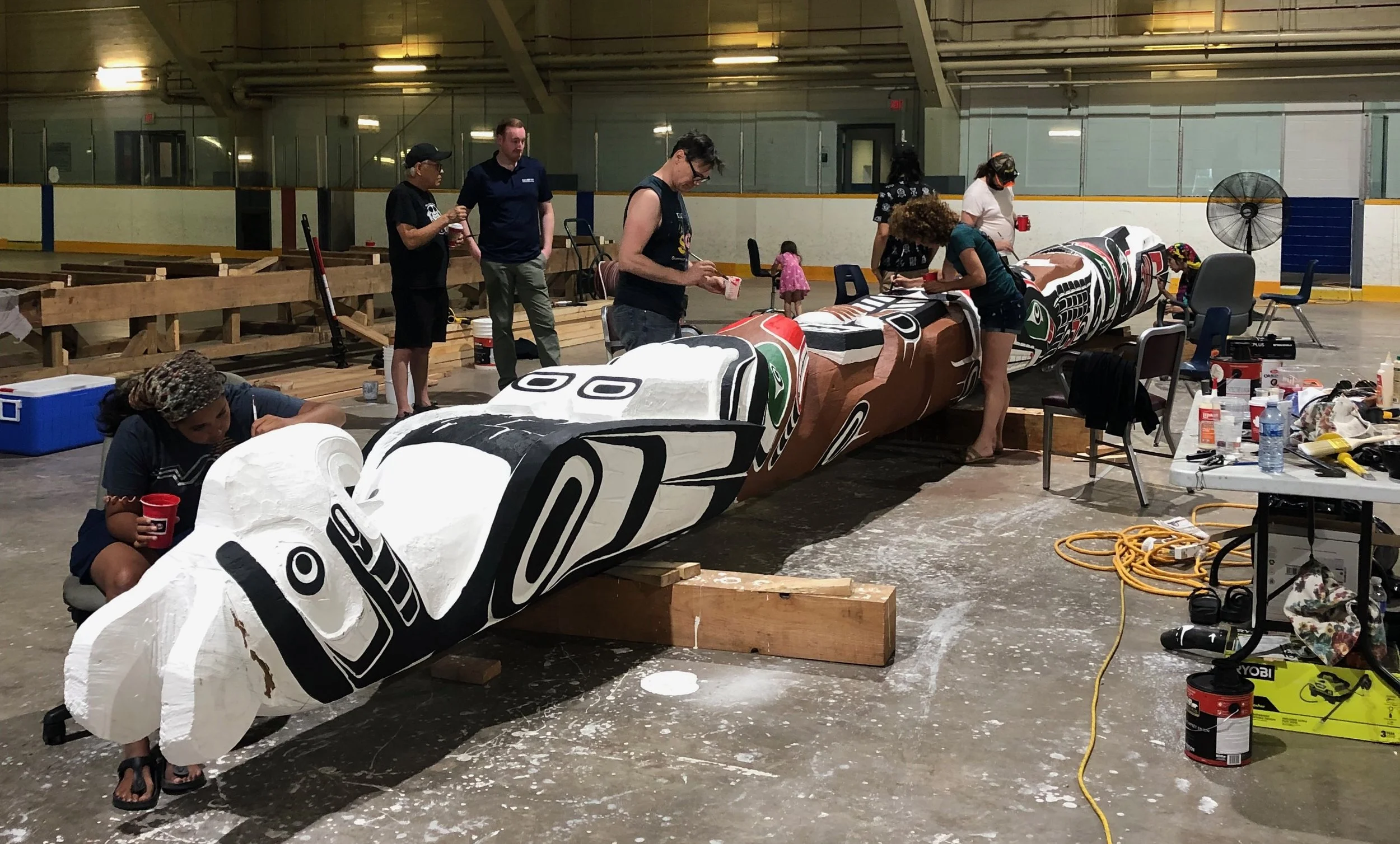
Community coming together to help restore the St. Catharines Centennial Totem Pole. Photograph by Emma MacDonald, July 2022.
It might seem unusual to find a totem pole in Niagara.
Totem poles are usually linked to First Nations from the Pacific Northwest Coast, not to the local Haudenosaunee and Anishinaabe communities in Niagara. So how did a totem pole carved by an artist from British Columbia end up in Southern Ontario?
In 1966, the City of St. Catharines commissioned a well-known Kwakwa̱ka̱ʼwakw artist Doug Cranmer to carve the St. Catharines Centennial totem pole as part of a larger centennial park project celebrating Canada’s upcoming 100th anniversary of Confederation. The totem pole stood in Centennial Gardens, now known as Richard Pierpoint Park, marking a symbolic gateway into the city.

Centennial Gardens Totem Pole installation, 1966. S1966.32.47.1. Source: St. Catharines Museum Blog.
Over the next 50 years, the park’s meaning and use changed. Recently, it became a site for encampments and some people started to see the park as unsafe. The totem pole was damaged by small fires and weather, and near the top a family of squirrels even moved in.
If you asked, many local residents would likely be surprised and say, “We have a totem pole here?”
Despite small repairs made over the years, by 2018 the totem pole was in bad shape. Worries about its structural integrity forced the City of St. Catharines to decide what to do next.
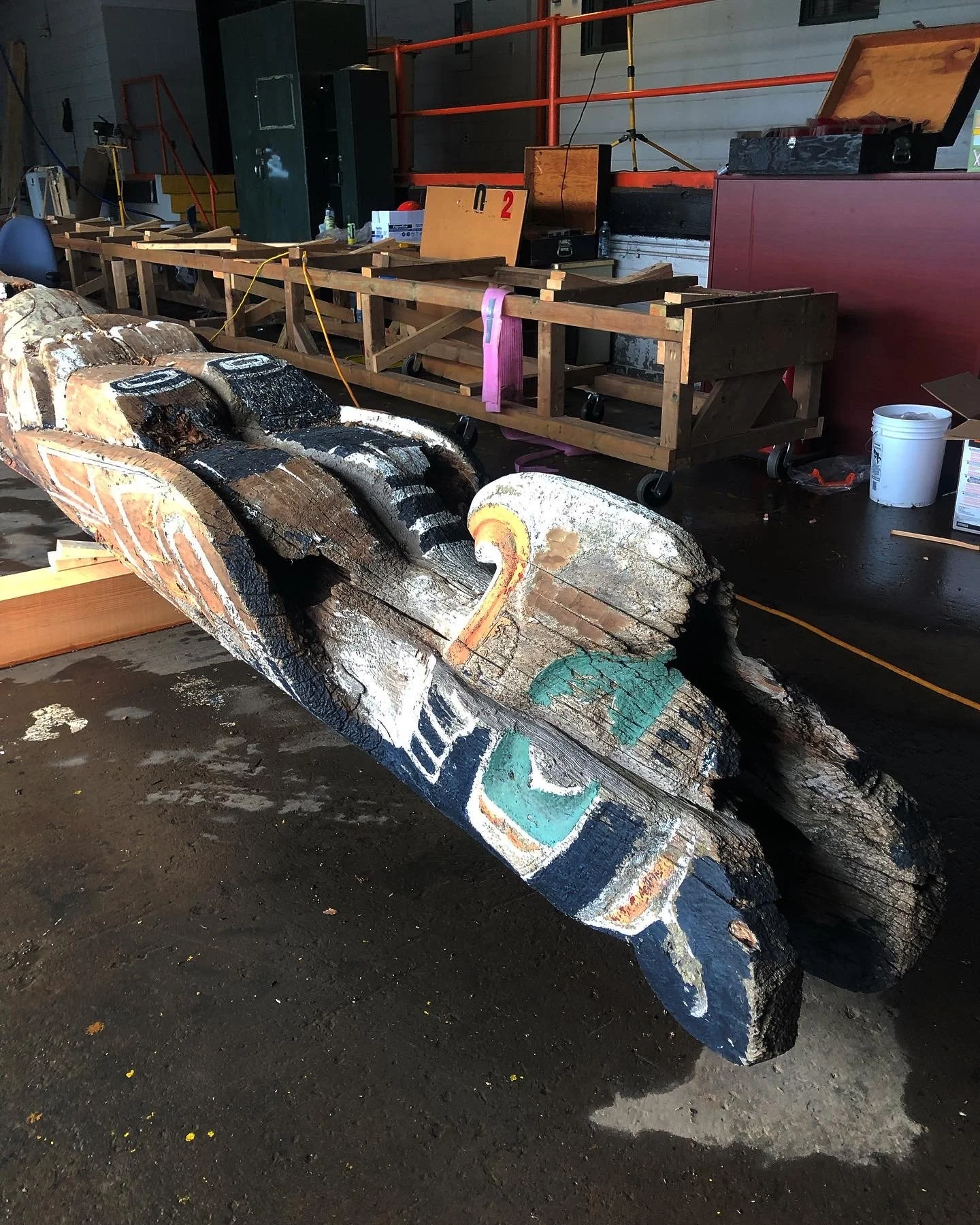
State of the totem pole before restoration work. Photograph by Emma MacDonald, July 2022.
But this question was about more than simply fixing a monument.
Western conservation usually aims to keep historic objects as unchanged as possible. But many Indigenous traditions from the Northwest Coast see totem poles as part of a living cycle that includes creation, use, aging, and eventually decay. Keeping the totem pole forever is not always the main goal.
So the city faced a tough question: how should it care for something that means different things to different people?
Instead of using just one way to preserve the totem pole, the City of St. Catharines began a public consultation. City staff held public meetings, collected feedback online, and talked with Doug Cranmer’s family to find the right artist for the restoration.
What emerged from these conversations was not consensus, but complexity.
Some residents saw the totem pole as an important part of the city’s centennial history and identity, and therefore, thought it should be restored. Others viewed it as an Indigenous cultural belonging that deserved respect by laying it down on the ground to fully finish its life cycle. Some even wondered if it belonged in Niagara at all.
These opinions showed that the totem pole’s cultural status was unclear. Unlike traditional totem poles in Northwest Coast communities, the St. Catharines totem pole stood far from its original cultural setting. Still, even though it was out of place, it had become part of St. Catharines’ history.
In the end, the consultations showed that most people, both Indigenous and non-Indigenous, wanted the totem pole to be repaired, no matter how they saw its meaning.
So the restoration process began.
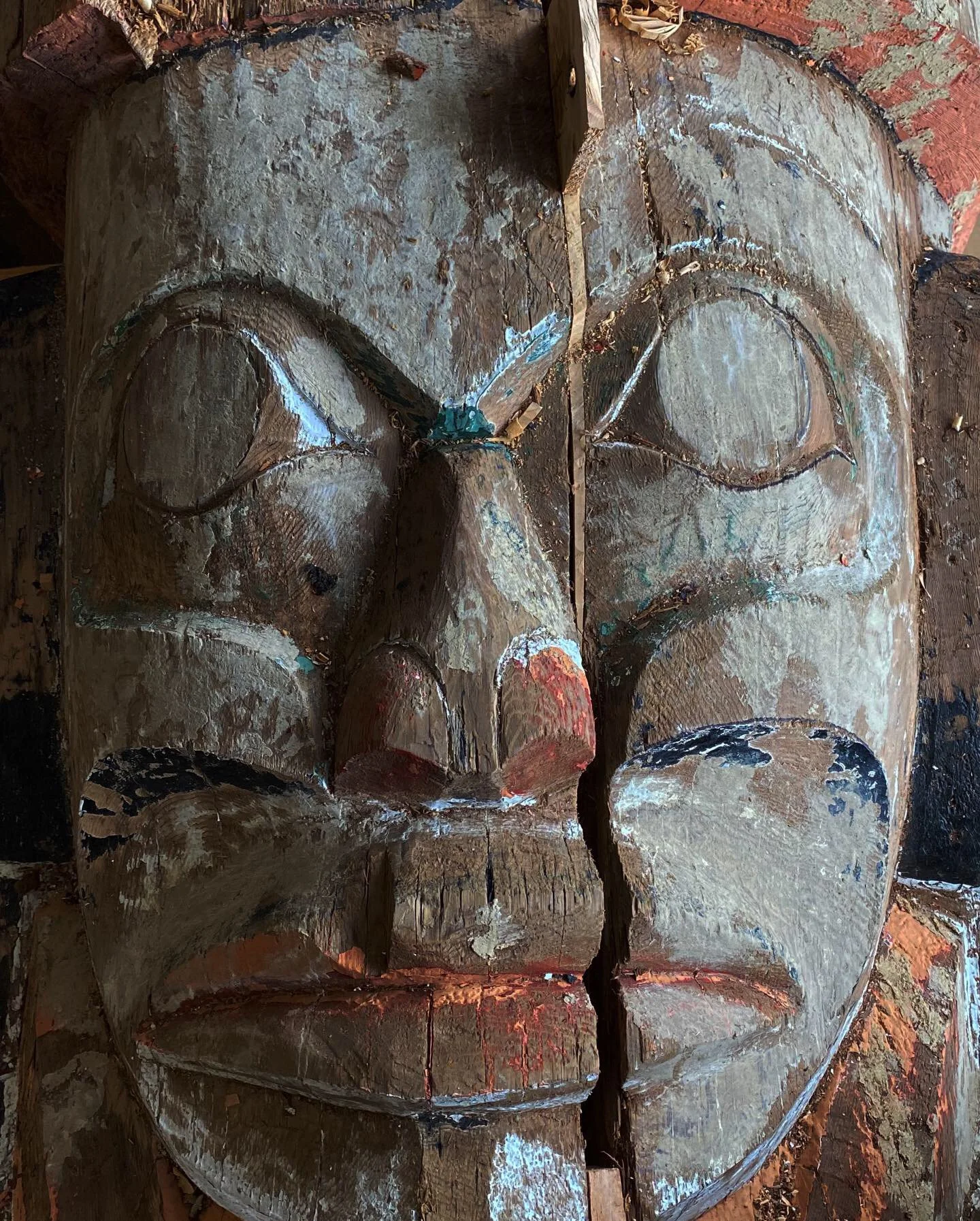
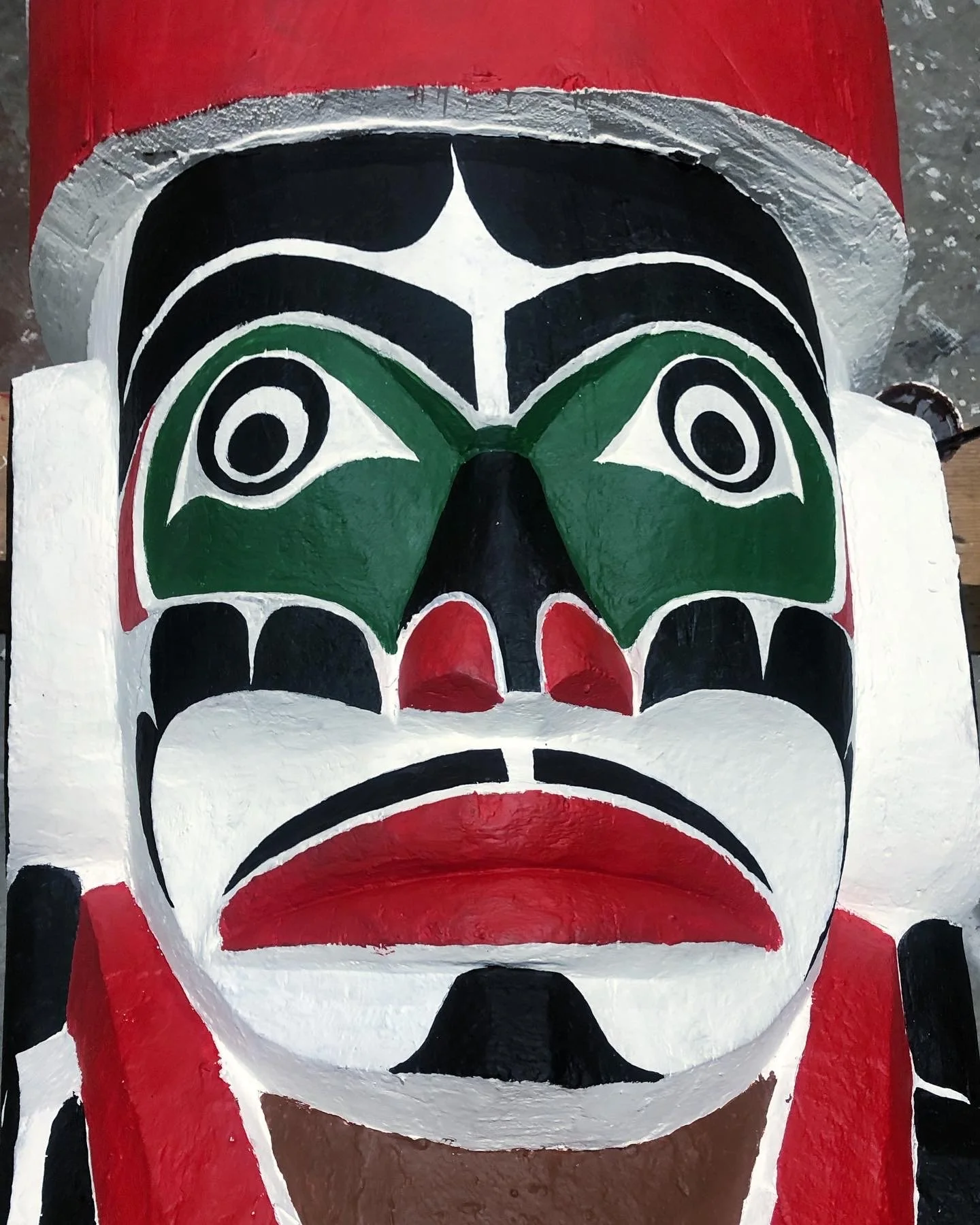
St. Catharines Centennial Totem Pole before restoration work and after (detail). Photograph by Emma MacDonald, July 2022.
In 2022, I worked as a summer student with the City of St. Catharines’ Cultural Services department and took part in the restoration project. The work was led by Bruce Alfred, an artist from Cranmer’s community and a former apprentice of the original carver. He was joined by assistants Dominique Wells and Cole Speck.
That summer, what stood out to me most wasn't just the restoration, but the feeling in the air around it.
The totem pole became a gathering place again. People of all ages and backgrounds came to paint, ask questions, share memories, and take part in the renewal. People who might never have talked to each other before stood side by side, helping with the project.
Remarkably, for a monument so seemingly out of context in Niagara, it suddenly felt deeply connected to the surrounding community.
However, that public response raised a new question for the city: should the totem pole be displayed publicly, stored, or returned to its original location after restoration?
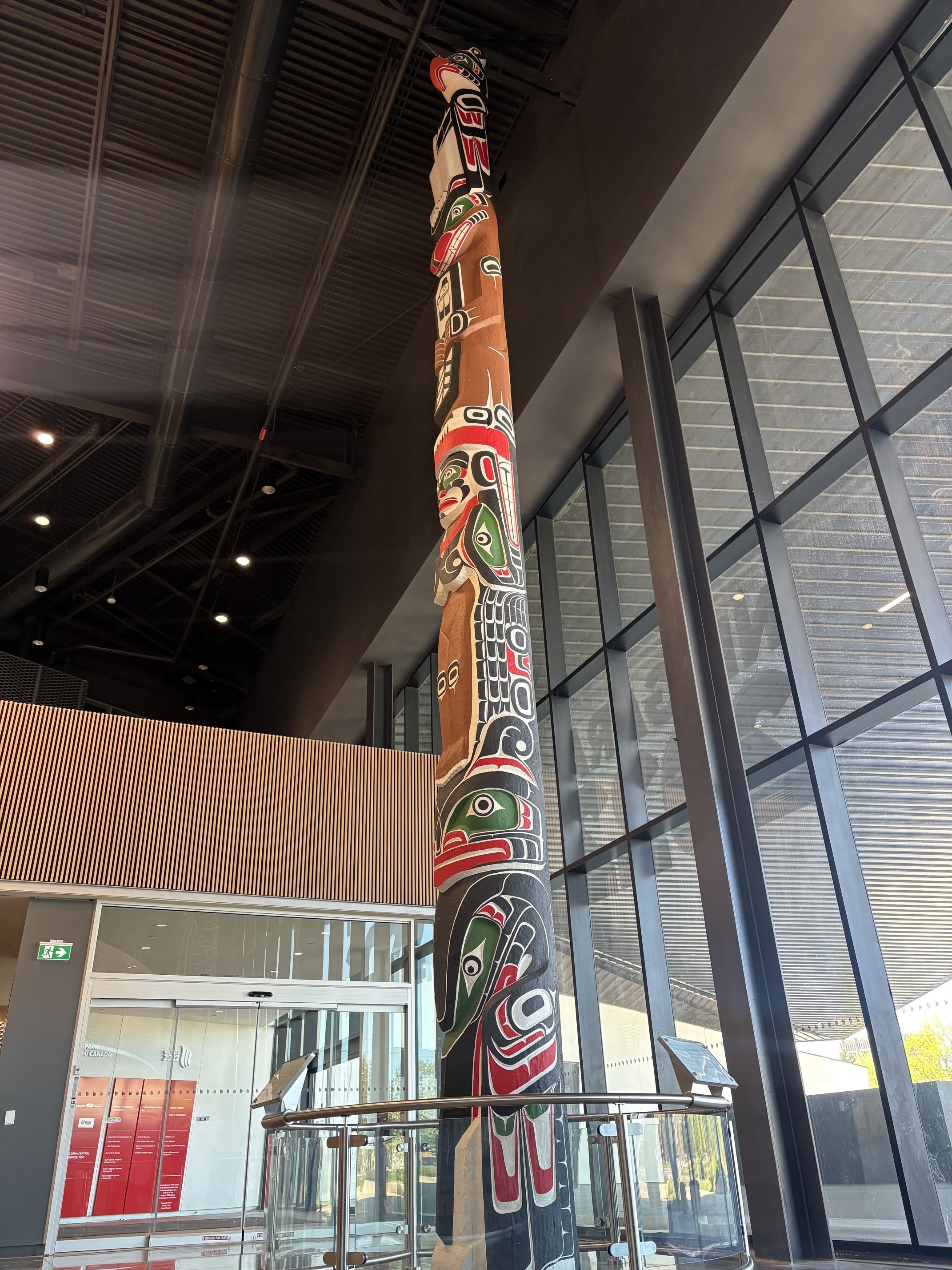
Recognizing both the cultural significance of th
e work and the practical realities of long-term preservation, the City Council approved staff recommendations to move the Centennial Totem Pole indoors with full support from the Niagara Regional Native Centre. In May 2025, the totem pole was installed at Canada Games Park adjacent to Brock University.
The decision, however, sparked renewed public debate. Should the totem pole remain outdoors where it was publicly accessible and visible within the landscape it has called home for decades? Or should it be protected indoors to preserve its physical condition for future generations?
This discussion brought up important questions about access. What barriers come up when public art is moved indoors, especially across from a university? Who feels welcome in those spaces, and who does not? At the same time, what do we save by keeping the totem pole away from weather, potential vandalism, and decay?
These questions, understandably, do not have simple answers.
Still, the strong feelings in the debate show something important. The totem pole might be out of place geographically, but it has become part of St. Catharines’ civic identity. Its meaning is not only about where it came from. It also comes from the relationships and conversations it inspires here in Niagara.
Perhaps this is why the totem pole continues to matter.
Not because it perfectly belongs — but because communities have continued to find meaning in it anyway.
Emma MacDonald is a PhD Candidate at the University of Western Ontario whose research examines the histories of totem poles in the Niagara Region. Her interest in the topic began while working on the St. Catharines Centennial Totem Pole restoration project as a summer student with the City's Cultural Services Department.